
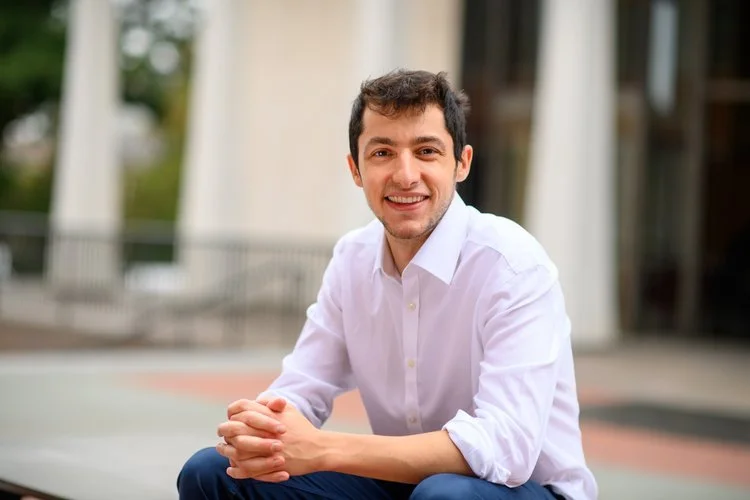
Sam Winter-Levy
02/22/25 GREAT DECISIONS: AI & AMERICAN NATIONAL SECURITY
Sam Winter-Levy is a fellow at the Carnegie Endowment for International Peace, where he focuses on technology and international affairs, and in particular the intersection of national security and AI. Before that, he was a Ph.D. candidate in politics at Princeton University and a Peace Scholar Fellow at the US Institute of Peace. He has also worked as a staff editor at Foreign Affairs and a reporter at The Economist. He has published academic research in the Journal of Politics, received Princeton’s George Kateb Preceptor Award for teaching, and written for publications including Foreign Affairs, Foreign Policy, Lawfare, the New Yorker, War on the Rocks, The New Republic, The Washington Post, the Los Angeles Review of Books, the Los Angeles Times, the Boston Globe, the London Review of Books, Scientific American, and the Times Literary Supplement. He received his undergraduate degree in English literature from the University of Oxford and was the Michael Von Clemm Fellow at Harvard in 2014-15.
The AI revolution is the leading edge of a larger high-tech revolution which promises to transform the world. Experts argue that international cooperation is needed to expand the opportunities these new technologies hold while protecting societies from their dangers. What are the key policy debates in this area, and what are the opportunities and limits on global AI rules of the road? How will the AI revolution impact American national security? What are its policy options to secure the benefits of AI and guard against its dangers?Under President Biden, the U.S. has advanced new ideas about trade, technology, industrial policy, competition with China, and the organization of the world economy. For most of the postwar era, the U.S. has tied its global leadership to cooperative agendas aimed at creating a more open-world trading system, but that has apparently come to an end. What are America’s options and opportunities as a leader of the world economy? How will America’s “foreign policy for the middle class” and strategic competition with China impact its leadership role? How can the postwar rules and institutions of the world economy be made safe for economic nationalism and great power competition?